Showing posts with label eco-friendly. Show all posts

Sunday, October 20, 2019

SOTC 346/365 (plus a bonus photo!)

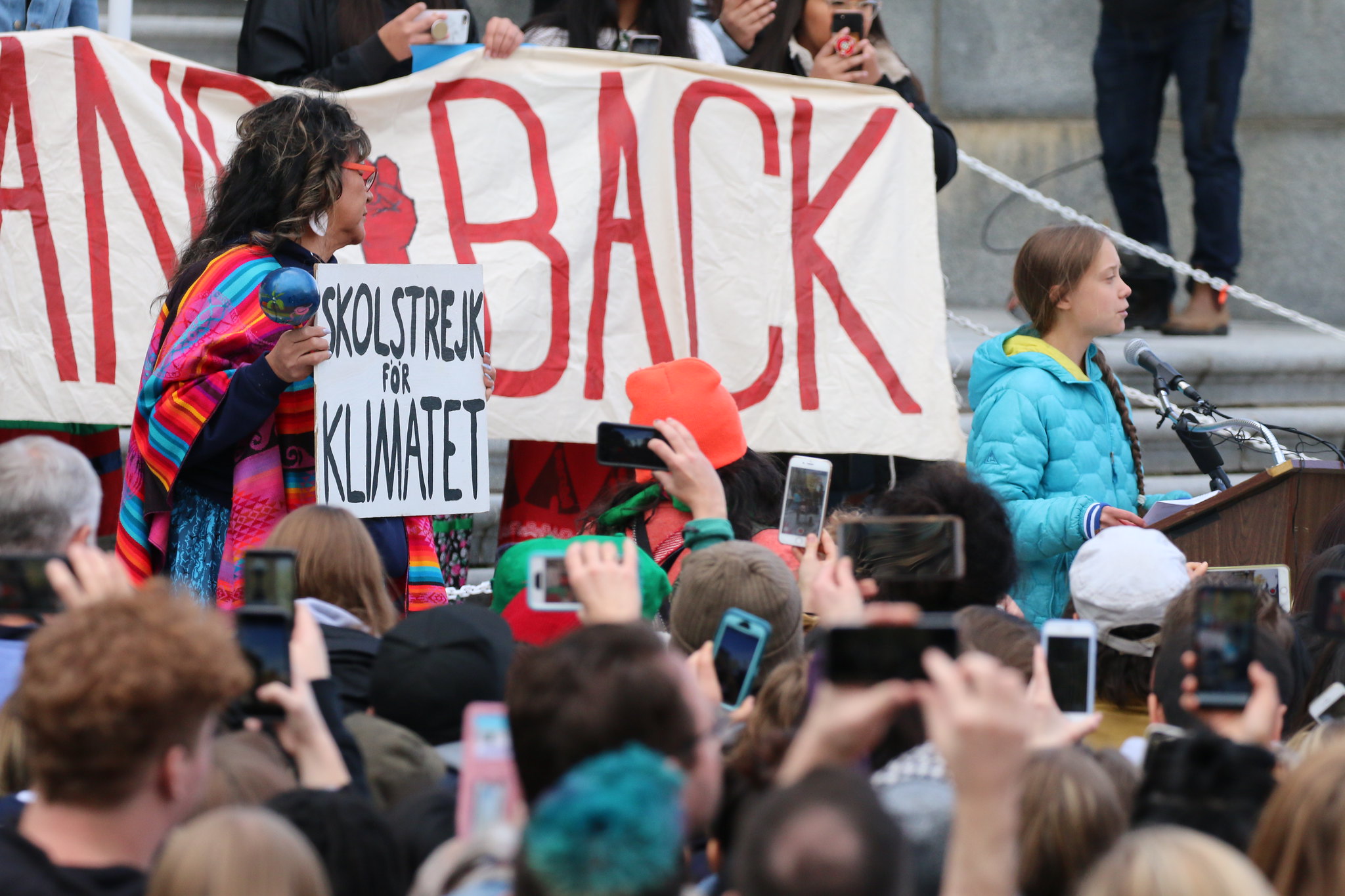
Listen up for a minute. I don’t typically do editorial photography; however, when my planet is at stake, I make an exception.

Teen climate activist Greta Thunberg came to Alberta this week. Her trip included a stop in Edmonton on a Friday, which happens to be her weekly school strike day.

SOTC 346/365


I’m primarily a nature/outdoor photographer, capturing the beauty of the world around me. And I want that beauty to last—both for my lifetime and the lifetime of generations to come. Everything I photograph inspires me to protect this earth I dwell upon. How does it not inspire others?!

So I admire Greta for turning up the volume on the issue of sustainability, and how critical it is to take actions--both individually, and as a society--that will improve our planet. Each part of the globe has their challenges; each part of the globe also has the power and ability to work and think differently.

SOTC 346.5/365


One news article I read following her visit to Edmonton indicated that while Greta's message is powerful, it is not fully informed, as she does not seem to recognize any of the initiatives that already exist--initiatives of the kind that she is advocating for. It was is something I reflected on as well. There are several great innovations, nationally and world-wide, that reduce our negative impact on the environment (one of my favourites is this bad boy here).

That being said, at the end of the day--at least in Alberta--we are still extracting oil from the ground in excess. Alberta’s identity is wrapped up in oil and gas, to a fault. I get it--I heat my home with natural gas and fill up my car at Shell like everyone else. AND, I also believe we need to move away from oil and gas to something more sustainable as fast as possible.

I do agree that Greta will need to start affirming the positive actions that are being taken if she wants her message to remain powerful and motivating over time. It's well-known that recognizing strengths is a better motivator for learning and change than admonishment. Greta's key focus right now seems to be in sending the message that society simply isn't moving fast enough to counteract the damage we are still doing; and, that we aren't taking those 2C seriously enough. While the message is limited in scope, she's not wrong. (I've been eco-conscious since well before she was born, and some days it blows my mind that some people don't even value the concept of recycling, let alone anything more advanced.)

I have lots of beautiful places I want to photograph both in this province and around the world. ...will they still be there when I arrive?


Monday, April 29, 2013

Not What They Mean By 'Green'

As I was out and about today, I spied something. It's something I've seen in a few neighbourhoods. Do you see what I saw?


That house in the middle sure seems to have the jump on spring. Jarringly so, given the brown-ness of all the lawns and park surrounding it. Walk a couple more blocks, and there is another house, also seemingly well-tended to. I took a photo of his lawn compared to his neighbour's. Certainly seems like he knows his fertilizers.


But look a little more closely. 


Do the edges of those blades of grass seem rather... square to you? A little too clean cut?

They should.

They're fake.

This is the fourth or fifth lawn I've seen in the last couple years made of artificial grass. And it's one of those things that just makes my brain go, "seriously? Really, seriously?" It continues to boggle my mind, some of the things we come up with that serve only to propel our self-centred little lives.

On the surface, I can see the appeal. Save time, energy and money by not having to mow, rake, weed, water, etc. Always have a beautifully manicured, lush-green lawn (because to be fair, I could not tell you where the fake lawns are in the middle of June--they blend in very well). And as NewGrass.ca goes on to say, artificial grass also means no grass stains on kids' clothing, and apparently this stuff is "completely unaffected by snow or ice," so... presumably no snow mould?

Yes, some advantages.

But at what cost?

First of all, are you really saving money? I checked the Home Depot website. It's $189 for 50sq ft. Estimating my front and back yards combined to be about 1,000sq ft, that works out to nearly $4,000. NewGrass has a warranty of 8yrs, so let's say this grass lasts ten before needing replacement. So that works out to about $400/year that this grass is costing me.

Now, let's look at what real grass is costing me. I spend about $5 per summer on a jerry can of gasoline for my lawn mower. I'm supposed to tune up my lawn mower with an oil and filter change every year. I haven't thus far, but let's say I'm on the ball--that's about $50. I try to let as much rain as possible do the watering of my lawn for me, so for the last two summers, I've only had to use my sprinkler 2-3 times. I let it run for the recommended max of an hour each time. I'm not sure what volume of water this is, but knowing my overall water bill during the summer months, I'm guessing the lawn only soaks up $10-20 of that. Let's say $20. I spent $50 on ant and weed killer last year. And another $10 on grass seed to fill in the hole where the ants were. I need to aerate and fertilize, which will run an average of about $200.* So $335 altogether.

Sorry, who's saving money?

Artificial grass supporters would say the extra $65/year is worth it, simply for the convenience of not having to maintain a real lawn. Okay, just hold that thought.

Let's look at the cost to our earth. NewGrass claims their product is eco-friendly, because you save water by not having to irrigate, and because it's made of recycled and recyclable materials. Except... since when was real grass not eco-friendly? MY lawn makes oxygen, for Pete's sake! And while I know that the oxygen output of my lawn is probably not as significant as the tree on the boulevard in front of it--given the surface area of grass blades to elm leaves--my lawn still has its role to play. And not just in the oxygen cycle, but the water cycle, and overall circle of life.

Remove the grass from a lawn, and you've removed one more small piece from the ecological equation that holds our atmosphere together and keeps our climate in balance. Remove the grass from a bunch of lawns, or a few school fields, and it starts to add up to something. Something NOT eco-friendly.

Finally, let's look at the cost to our mental and physical well-being. I'm not sure how many calories a person burns by pushing a lawn mower, raking leaves and grass, pulling weeds, etc. But for me it seems to be enough that, in conjunction with my other favourite summer activities, I do not need to carve out extra time to be active, nor do I need to spend money on a gym membership (again, who's saving money?). I am also soaking up vitamin D from the sun, which is still the best way to get vitamin D.** 

As an introvert, my lawn and garden work is valuable recharge time. Sure, I could just as easily recharge with a book in my hammock, but remember, I'm also being physically active. That's two birds with one stone, people. Plus, the hammock is much more satisfying after all that yard work.

Speaking of satisfying, what a sense of accomplishment and ownership when I maintain my own lawn. Such a heightened sense of competence from all the different aspects of lawn care I can do independently. I have learned so much over the last two summers about the functioning of lawn mowers, how weeds grow, the process of edging, the benefits of mulching... I could go on. 

....What sense of pride and accomplishment does your extra $65 a year get you???

Socially, working in my front and back yards means I have a chance to connect with neighbours. It means I form a relationship with the "fertilizer guy", with my colleague's husband who will teach me how to change the mower's oil, with the greenhouse lady at Rona (I've gleaned her wisdom two years in a row, now). I'm building community.

There is one more aspect of our well-being affected here. When we lose our interaction with nature, we lose our connection to nature. And I'm not sure people realize how important that connection to nature is. Interacting with nature is a sensory experience. I understand the stubbornness of getting grass stains out of jeans--but there is something children learn when they roll around in the grass and feel it under their skin, when they feel and see what it takes to hit the ground hard enough to make a grass stain, when it squishes under their shoes after the rain, in being close enough to the earth to smell it. I'm pretty sure ladybugs and earthworms and the things of childhood discovery don't roam around in fake grass. And while I can't paint all parents with the same brush, I just have this gut sense that those who put artificial grass on their lawns are not the kinds of parents spending all their 'extra time' camping out in nature with their children to give them the experiences they're missing at home. Just a hunch.

In the same way that children are losing their ability to identify where food comes from as they eat more and more processed meals, they will start to lose their understanding of the natural world, and how it influences so many other systems. There is something precious in fully participating with nature in the seasons--watching the change marked by each one. When your lawn stays the same all year.... it's just not natural.

And this connection with nature is not just valuable for children, you know. Who doesn't link carefree summer days with the smell of fresh-cut grass? Who's ever felt the cool relief of laying in the grass after running around in the heat? Do you ever use wet grass to wipe mud off your shoes? Ever watch a robin expertly pluck a worm from the depths of the front lawn? Have you ever grabbed that stray piece of wild grass that's just perfect for blowing like a trumpet? Or ever sat in a remote corner of a field, after a romantic picnic, in that first really deep conversation with a significant other, on the cusp of taking that relationship to the next level, all the while plucking blades of grass beside you to give your nervous hands something to do while the words stumble out of your mouth and you decide whether you can handle looking up from the grass into his eyes?

Okay, Gina, you're diving off the deep end, here. It's just a patch of grass.

Yes, but that's how anything harmful starts. As "just a patch" of something.

Artificial grass is just one more thing that feeds our selfish, individualistic desires. Someone who wants to save themselves a little bit of time and energy. But at the cost of further damaging an already-broken ecosystem, and depriving themselves--and possibly their children--of the natural experiences that contribute to physical, mental, social, and emotional well-being.

Seriously? Really, seriously?


*Though I'm getting aeration and fertilization done for nearly half of that this year.
**Yes, only when I am also responsible about sunscreen, which I generally am.

Wednesday, September 5, 2012

A Word on Packaging OR SOTC 5/365

So, last week, a coworker calls me from Costco, stating that there's a four-pack of 8-gig-each flash drives on sale for $30 and do I want a pack? Sure, that's a pretty good deal for memory sticks, so I say go for it. She says she'll bring them to me at the office when she's next in.

As she described the product over the phone, I envisioned four memory sticks, lined up either in a row, or two-by-two, in that thick seamed-around-the-edges-and-need-heavy-duty-kitchen-scissors-to-cut-it-open-and-even-then-you're-going-to-hurt-yourself kind of plastic that everything is packaged in these days. And I envisioned that packaging to be roughly 5x7".

Boy, was I wrong.

I have witnessed excessive packaging before. I once ordered a small stationery item for work--a hole punch, or a stapler, I think. It was packaged in its own small box, but that was then shipped (and by shipped, I mean local delivery) in an 11x14x8" box filled mostly with crumpled paper (I was so glad it wasn't packing peanuts). Ridiculous.

When I saw the goodies on my desk today, it was a little bit like that all over again. The four flash drives were indeed packaged in that thick seamed-around-the-edges-and-need-heavy-duty-kitchen-scissors-to-cut-it-open-and-even-then-you're-going-to-hurt-yourself kind of plastic. But that plastic was also sealed in between two layers of roughly 9x12" cardboard.

Srsly?!

Flash drives generally range from 1.5-2.5" long. People marvel at these tiny little objects--these tiny little pieces of circuit board that hold more bytes of information than my first laptop did. Technology has always been about being sleeker, thinner, and more compact than the preceding model.
SOTC 5/365 by gina.blank

So, why do these same companies not seem to show the same attitude towards the packaging they put these products in?

Okay, not all companies.

I've always appreciated the compact, only-what's-necessary packaging of my Apple products (one more point for them).

But they are the exception, not the rule.

It just seems so backwards.

       Dear SanDisk,
       
       Please stop packaging items
       the size of my thumb
       into cardboard
       the size of my laptop.
       
       Sincerely,
       Tech-Savvy but Eco-Friendly


Friday, July 6, 2012

340/365

340/365 by gina.blank
If you put out any sort of furniture with your garbage, the City of Edmonton will not take it. I get it. I wouldn't want to be the garbage man heaving couches, mattresses, and other large hassles into my truck on a weekly basis.


However, if you take it to the Eco-Station, they want to charge you $8.00 to leave it with them, because it's garbage, not recyclable (I could take the equivalent volume's worth of computer parts, and that would be free).

BUT! If you dismantle the chair entirely, and then put all the parts into garbage bags, you can beat both systems entirely.


Gina: 1
Edmonton: 0

Saturday, March 26, 2011

Even More Green

I have technically been on the eco-friendly train since before people started realizing it was a good train to be on. I simply grew up in a conscientious household.

My parents made me turn out the lights when I left the room. We used heavy-duty cloth bags (in bright 90's neon colours!) and Superstore bins when we went grocery shopping. My brother and I walked to school from Grade 1, then took the bus to school as we got older. My mom took the bus to work, and if the car hadn't been started all day, my dad was quite reluctant to have to start it for one small trip somewhere. We replaced things only when they wore out. We took bottles, cans, paper, and plastic to the recycle before blue bin/blue bag programs came into existence. I even remember we didn't have fancy little notepads for grocery lists. We would take computer paper used on one side and tear it into quarters. The pile sat on the bookshelf at the end of the kitchen counter; I don't remember the pile ever running out. We had a compost bin from the time I was in junior high, and I don't have a single back yard memory that doesn't have an image of the garden (not that I wanted anything to do with it back then!). It was just good practice to live this way.

Once I started living on my own, and there was more talk about being "environmentally friendly", I continued the practices that were already well-formed from childhood, but I also took it up a notch. I started printing things on the reverse sides of used computer paper (I think I even got away with handing essays in to like-minded professors this way!). I bought compact fluorescent bulbs before people really knew what the heck they were. Admittedly, I had Superstore bins, but still accumulated plastic bags on smaller shopping trips. Still, it has meant that in almost ten years of living on my own, I've never once had to buy a single garbage bag for my kitchen garbage can. I have always been able to reuse plastic shopping bags.

That was in my early-twenties. The term "environmentally friendly" has since been supplemented with terms like "green", "organic", and "eco-friendly". So many more people are increasingly cognizant of their carbon footprint--myself included--and I have taken it up a notch again. A few years ago, I bought reusable mesh bags for produce. I did worm composting in my condo, and while it flopped a couple times and I eventually gave up, I'm excited to start for-real composting this spring once my barrel bin arrives! I have a programmable thermostat, and I keep it low at night and when I'm away. I will be planting a garden this spring. I use things like biodegradable hand soap. ...My job doesn't really allow me to take public transit to work, but I try to ride my bike to places in the summer, and take transit whenever it is feasible. And I am trying to buy locally more often (or at least keep it within Canada).

Yesterday, I went with a friend to Edmonton's Home & Garden Show. It was the first time I had ever been, but seeing as now I have my own home AND garden, I thought I would see what knowledge I could glean. I mentioned to my friend that it was hard to find new, innovative ways to be eco-friendly in my daily activities. All the things like turning out lights, unplugging electronics, running the dishwasher only when full... that's child's play for me (and--one would think--common sense for the rest of the world). I find I am often looking for a practice that I haven't tried yet that will fit into my lifestyle (cuz right now, buying things a new high-efficiency dishwasher or bottomless hot water tank is just slightly out of the budget).

I was happy to come away from the Home & Garden Show with a couple new eco-friendly options to try. First, I purchased a set of micro-fibre bed sheets (micro-fibre itself is a man-made product and not all that natural, but the sheets will dry faster in the dryer, they are durable, and are allergen-resistant). I also went out on a limb and bought a SmartKlean laundry ball. If the claims hold true, I may not have to buy laundry detergent for 7-10 years. I have yet to test its ability to pull stains, but I have done three loads of regular laundry today and everything has come out clean and fresh. I can't complain.

This afternoon, I also sat down and calculated my carbon footprint. I've known for a couple years that I could do this, but have never taken the time. The City of Edmonton has an easy-to-navigate questionnaire that asks you to rate your practices in various areas that affect your carbon footprint. As with anybody's lifestyle, there are a few less-than-friendly practices I engage in right now simply because I can't help it, and am unable to improve upon it at this time. Still, the overall assessment was good, and it generated a couple suggestions that I could actually consider trying or setting as a goal in the next year.

I am always looking for that 'next step' in being eco-friendly. Participating in things like Earth Hour--which is tonight--is good, but just turning off the lights doesn't cut it anymore. Maintaining the earth needs to be embedded in our lifestyle.

Saturday, March 21, 2009

Eisenia foetida

Eisenia foetida--this is apparently what I am breeding in my house. Last year, I purchased a 1/2lb of red wiggler worms to start indoor composting (or, if you want to be fancy, vermicomposting). I was successful till about Christmas, and then they all died. Combination of lack of "food" and lack of moisture, I think.

So I spent another $35 and bought another 1/2lb of worms, determined not to kill these ones off! I was worried for a while, because I am only one person, and I don't put out a lot of compostable waste on my own. Every now and then I can nab an apple core or banana peel or coffee grinds from a friend or coworker. But apparently I am feeding them enough, because for the first time, I crumbled one of the newly created dirt clumps to find lots of teeny little baby wrigglers! What a happy surprise!

Of course, if I get too many worms, I will not be able to sustain their dietary requirements, even with the help of friends. My mother and one of my coworkers has already asked for me to give them some worms when I start getting copious amounts, so that could very well be sooner rather than later!

Anyway, here's a picture of one of the little cuties. Don't be fooled; I used my macro lens on this guy. In reality, he's only about 3-4mm long, and maybe 1/2mm wide. And poor guy. These worms are light sensitive, and I took about five photos, all using my flash, which means I probably blinded him.

...I wonder how long it takes to get them to full size...?