Showing posts with label chronic illness. Show all posts

Sunday, July 23, 2023

The Road[s] to Recovery are Pathways in My Brain

This can't continue, I thought. Yet another GI flare from accidental ingestion of a trigger substance, and a few more foods became collateral damage in the process; leaving me with a total of 10 foods my gut can handle. And that includes baking soda and salt.

This, on top of the fatigue, the brain fog, the chemical/scent intolerance, the anxiety--all of which also seemed to be slowly getting worse.

This can't continue.

I had already been learning about how, for those with ME/CFS and similar multi-systemic, nebulous disorders, calming the nervous system is key in terms of any chance of recovery.

And I had been taking that to heart: increasing time spent in meditation, mindfulness, and nature; reducing my hours at work; reducing screen time; regular acupuncture and massage; yoga; a therapist with specific training in nervous system regulation; reconfiguring my Airbnb to be even more of a self-operating machine; breath work and vagus nerve exercises; maintaining hobbies and social connections to the best of my ability...

While necessary, these habits and practices clearly weren't sufficient.

As I wandered through my days wondering if I was missing something or if I was going to be one of the ones who just continued to get worse over time, I found myself listening to a podcast on ME/CFS recovery. In one episode, the host happened to mention a brain retraining program I'd heard of several years ago. It didn't seem like a fit at the time, and I hadn't given it much thought. Later, I'd seen it mentioned in a support & recovery group on Facebook, but at that point, I thought the practices I had in place were surely the equivalent.

Hearing it mentioned yet a third time in the podcast episode, I decided to reconsider it.

And my brain has been in rehab ever since.

The program is called the Dynamic Neural Retraining System; or, DNRS. In line with doctors and researchers like Gabor Maté, Ellie Stein, and Alex Howard, DNRS describes disorders like ME/CFS, fibromyalgia, long Covid, multiple chemical sensitivities (MCS), mast cell activation syndrome (MCAS), etc., as the nervous system being stuck in a maladaptive stress response--i.e. stuck in fight/flight/freeze. What happens when the brain is stuck in fight/flight/freeze? Excessive release of stress hormones like cortisol, leading to dysfunction in body systems like digestive, adrenal, and immune. The brain also starts to experience things as a threat that aren't really a threat (like food). And the longer the brain and nervous system are in this state, the stronger those faulty neural pathways become.

This I already knew. What I struggled with was how to get out of 'stuck.'

DNRS offers a specific protocol of practices to get the nervous system--specifically, the limbic system--out of the maladaptive stress response. Using principles of neuroplasticity, DNRS draws on practices from cognitive behaviour therapy, neurolinguistic programming, and emotional regulation to rewire the dysfunctional pathways that have developed in the brain over time.

...And it's working?!

At the time of this post, I have been doing the DNRS program for just over a month. The protocol requires commitment to doing the practices for an hour each day for a minimum of six months. That said, the program creator and coaches repeatedly mention that most people see changes and shifts well before the six-month mark. I have no idea what to expect for myself, or on what time frame.

However, in the last several weeks, I have noticed:
  • Increased energy - I mean, I'm no Energizer Bunny, but I'm now able to get through the regular activities of my day without feeling like a leaden, brain-foggy mess by 3pm (which required a nap if I wanted to do anything--like make supper--during the remainder of the afternoon or evening).*
  • Improved mood
  • Increased tolerance to scents and chemicals - two months ago, the forest fire smoke was incapacitating. Last weekend, I went camping in the smoke-filled mountains for two days without issue.
  • Increased cognitive clarity - I've noticed this most in the way I've been crushing it at word puzzles and DuoLingo lately.
  • Increased presence in social activities
This is not small potatoes!** Aside from the practical benefits of feeling like a functioning human being more often, it has provided an increased hope for my own recovery.

I share this here for a couple reasons:
  1. Knowledge is power. We can learn so much from the stories and experiences of others.
  2. DNRS encourages it. One of the pillars of the program involves maintaining an elevated emotional state often to counterbalance the exacerbated negativity bias that has developed. Sharing and celebrating positive outcomes maintains hope and motivation to continue on tough days (because it's not a linear process and tough days will still happen as the brain re-configures its neural pathways).
DNRS is not a substitute for all the other work I've been doing, and the other work I've been doing is not a substitute for DNRS. Indeed, DNRS participants are encouraged to maintain healthy practices that provide safety cues to the brain, and support that elevated emotional state.

I am so looking forward to continuing to experience the rewiring of my brain and nervous system in real time. I'll let you know what I discover!


*To use the language from previous posts, it appears I have a few more spoons at my disposal.
**And gives me hope that soon there will be real potatoes!

Friday, May 12, 2023

Mystery Unfolding

It's interesting to consider that today is ME/CFS Awareness today, as it was a year ago--almost to the day--that I reached my breaking point in this health journey. 

After four years of increasing symptoms, I had not yet been diagnosed. I was recovering from a 3-month-long GI flare that had caused a lot of pain, fatigue, and left me intolerant to even more foods than I had been previously. More often than not, I was headache-y; brain-foggy; nauseated, bloated, and crampy; I was itchy; I was in pain; and I was oh, so tired.

My mental health was not faring much better at that point. I'd been screened and tested for all the things. But having a bunch of tests come back "normal" didn't fill me with relief--I felt anything but 'normal'. Various professionals tried to chalk up some of my symptoms to stress. Of course I was stressed! I was trying to live a life that felt very uncertain, in a body that felt like it was retaliating against me. Sometimes I just wanted to scream, NO! Pay attention! Something is wrong inside me!

But if doctors didn't know what it was, how could they take care of me? How could I fully take care of myself? Was I doing things to make my health worse without knowing it? Was this something life-long, or temporary? Would the day's symptoms interfere with my activities or just simmer in the background? Should I be taking time off work? How would I even advocate for that with a mystery diagnosis? What if it really is all in my head? What if I can't afford this health issue?

I felt like I was being consumed by this thing I didn't even have a name for. 

I had attended a webinar for work a few weeks prior, which included some discussion around mental health. They shared something called the Stress Continuum, shown below.


I was already familiar with the "surviving and thriving" dichotomy. I knew I'd spent much of the last several years 'surviving' (pandemic notwithstanding). And I knew I was feeling particularly rough at that point in time. But this was the first I'd seen that what I was experiencing was not just 'rough' surviving, but that I was camped out in Struggle.

Something hit different seeing everything I'd been experiencing for several months listed so straightforward in the yellow column. "I really can't keep this up" I whispered to myself.

I had a friend offer some wisdom and empathy, and when I limped into my scheduled therapy appointment two days later, it didn't take much of her own wisdom and empathy for me to unravel.

This was rock bottom.

Now; you know how some of the story has progressed. It's amazing the relief and insight a diagnosis can bring. It provides the ability to access and implement relevant treatment strategies; find a community of people with shared experiences to learn and grow with; and interestingly, I've received less of the well-meaning, but often useless, "have you tried...?" comments.

I'm focusing on this aspect of my health journey today, because I think as much as we need to be aware of the disorder itself--to find better prevention, treatment, and recovery strategies--it's important to be aware of the individual's struggle leading up to this particular diagnosis. 

@trishagreenhalgh
ME/CFS is not the only medical condition out there that is tricky to diagnose. But I would argue it's one of the more maleficent conditions, in that there are no clear tests for it (i.e. you won't find lesions or antibodies), and doctors receive very little training on the condition. Indeed, it never crossed the minds of my GP or the 6 specialists I'd bounced around to (or the myriad of integrative health professionals I work with on a regular basis). There are some who still hold onto the stigma from the 80's that it's not a "real" condition, or that it's psychosomatic at best. However, the CDC recognizes it as a neurological disorder, and while there are no specific tests to diagnose ME/CFS, there are patterns and indicators that show up in those with that diagnosis significantly more than other conditions or the general public (the PEM and the mitochondrial dysfunction, for starters).

In many ways, I am fortunate. My condition was 'caught' early. My protective factors, self-advocacy, and various forms of privilege are likely what kept me from moving into Crisis on the continuum.*

Others are not so fortunate.
  • There are some who go much longer without a diagnosis than my four years.
  • There are those with much more severe degrees of ME/CFS who are consumed by depression or anxiety (or both).
  • There are many for whom it's not safe, affordable, or otherwise possible to keep coming back to their doctor and demanding the next option for answers.
  • There are some who are never taken seriously by any doctor.

My understanding is that the tides may slowly be turning, thanks to Long Covid. There is increasing evidence that Long Covid is ME/CFS. Approximately 80% of people with ME/CFS develop the condition after a viral infection. Many with Long Covid meet the criteria for an ME/CFS diagnosis; it's likely that Long Covid just happens to be ME/CFS where the specific virus is known. And because of the nature of Covid, the medical field is taking Long Covid seriously,** which means hopefully those with non-Covid-related ME/CFS will start to be taken more seriously too.

Until then, I guess we continue our efforts to make the invisible visible, to get the medical attention we deserve, and in a timely fashion, and to advocate for better.

I do hope that you who are reading these posts are internalizing the knowledge and stories I am sharing. And I hope you will be an ally to those with chronic conditions--particularly the nebulous ones like ME/CFS, fibromyalgia, Long Covid, MCAS, etc. In the same way that marginalized groups of people find themselves having to do the work of educating the privileged when they shouldn't have to, the same often holds true for those with chronic illness. Certainly because of my value of learning, I choose to do this to a certain extent. However, I get tired easily, and there is strength in numbers.

How could you help someone around you who might be Struggling today?


*Thought I dipped my toe into crisis when I contracted Covid. Covid made my ME/CFS symptoms ten times worse, and hit when I was still trying to climb out of that rock bottom place. While I did not consider hurting myself, I could start to understand why those who live with more severe ME/CFS sink into deep depression, or consider ending their life.

**Though, given how blasé the world has become about the short and long-term effects of Covid, I still sometimes wonder if they're taking it seriously enough. 

Monday, May 1, 2023

Becoming Aware... of Spoons

May is ME/CFS Awareness Month. I'm sure it's an awareness month for a bunch of other conditions and causes, but this one is extremely personal, so I'm gonna take it and run with it. It seems so strange to talk about awareness for something I’m aware of every waking moment (and sometimes even in sleeping moments; this damn disorder has infiltrated my dreams on more than one occasion). 

But I would guess that is always the way for the person living with the thing for which they are trying to make others aware.

"Aware is half way there," it has been said; yet, I also feel there needs to be so much more than just awareness of any given cause, disorder, disease, injustice, etc., to move the needle on change or to make amends for damage done. (Hold that thought; I'll come back to it in time.)

May 12 in particular is International ME/CFS Awareness Day. Actually, that day isn’t solely about ME/CFS. It’s the International Awareness Day for several disorders that fall under the umbrella of nebulous multi-systemic neurological or immunological conditions—ME and its cousins, like fibromyalgia, multiple chemical sensitivity... These disorders are common, yet so poorly understood, that they get lumped together.

I guess we really do need to focus on awareness.

I wrote a post last year explaining a little bit about what ME/CFS is, so if you're entirely new around here, or want a refresher, pause for a moment and check that out, or check out the CDC's definition.

There are many facets to ME/CFS, too much to focus on in one post. Today, I want to shed some light on the 'fatigue' part. ME/CFS is one of many chronic illnesses that are considered "energy-limiting." Yet, the 'fatigue' part of "Chronic Fatigue Syndrome" has been so misunderstood and misinterpreted. It's not just just that we need a nap, or a couple good nights' sleep. ME/CFS involves mitochondrial dysfunction. You may recall from high school that mitochondria are responsible for making all the energy your body needs and uses. Well, my mitochondria no longer make energy efficiently. So that means it's hard to have the energy I need to do the daily tasks of living, working, and socializing; and, it's hard for my body's internal processes (digestion, cognition, circulation, etc.) to function at full capacity.

Sometimes I've compared my daily experience to that of being an old cell phone with a battery that drains too quickly, and doesn’t seem to charge properly. It’s as if I’m forever closing power-heavy apps, dimming the screen, and enabling low-power mode, just so I can text my friends.

I just finished a book that uses currency to describe the energy you have to "spend" each day (no overdraft or loan or credit card options, by the way).

Others have described it like a vehicle--there is only so much fuel (and there seems to be a leak somewhere).

However, one analogy that seems to have struck a chord in the chronic illness community is “Spoon Theory.” It’s not actually a theory, it’s an analogy, but stick with me. The creator of this analogy uses spoons to represent energy. Essentially:
  • Everyone wakes up with a quantity of spoons; healthy people wake up with [a lot] more.
  • Every task you do, and every experience you engage in, requires a certain number of spoons (FYI, healthy people use less spoons for the same task as someone with a chronic illness).
  • If you run out of spoons before the end of your day, you’re in trouble.
  • While most people’s spoons magically replenish in full during sleep, that’s not a guarantee for those with ME/CFS (or other energy-limiting chronic illnesses). It’s more than likely we will replenish some spoons, but the number varies from day to day. Yesterday I woke up with 10; today maybe only 6.
Turns out, this analogy resonated in the chronic illness world, and begat a term for people who have to count their spoons carefully--Spoonies. (I'd seen the term Spoonie used on disability-related social media posts, but never really understood what it meant. And then suddenly I was one.)

As you start—or continue—on your awareness journey with me this month, I invite you to take 5-10 minutes to read more about Spoon Theory by clicking the meme below.*


Sunday, October 16, 2022

Aware of the Invisible

I recently learned that this week is Invisible Disability Awareness Week.

I have mixed feelings about awareness weeks. Awareness is great, but sometimes I feel like it doesn't move the needle just by being aware that certain disabilities, illnesses, or stigmas exist in the world. And yet, as was stated more than once in a course I took on implicit bias: "aware is halfway there." So maybe there's something to it.

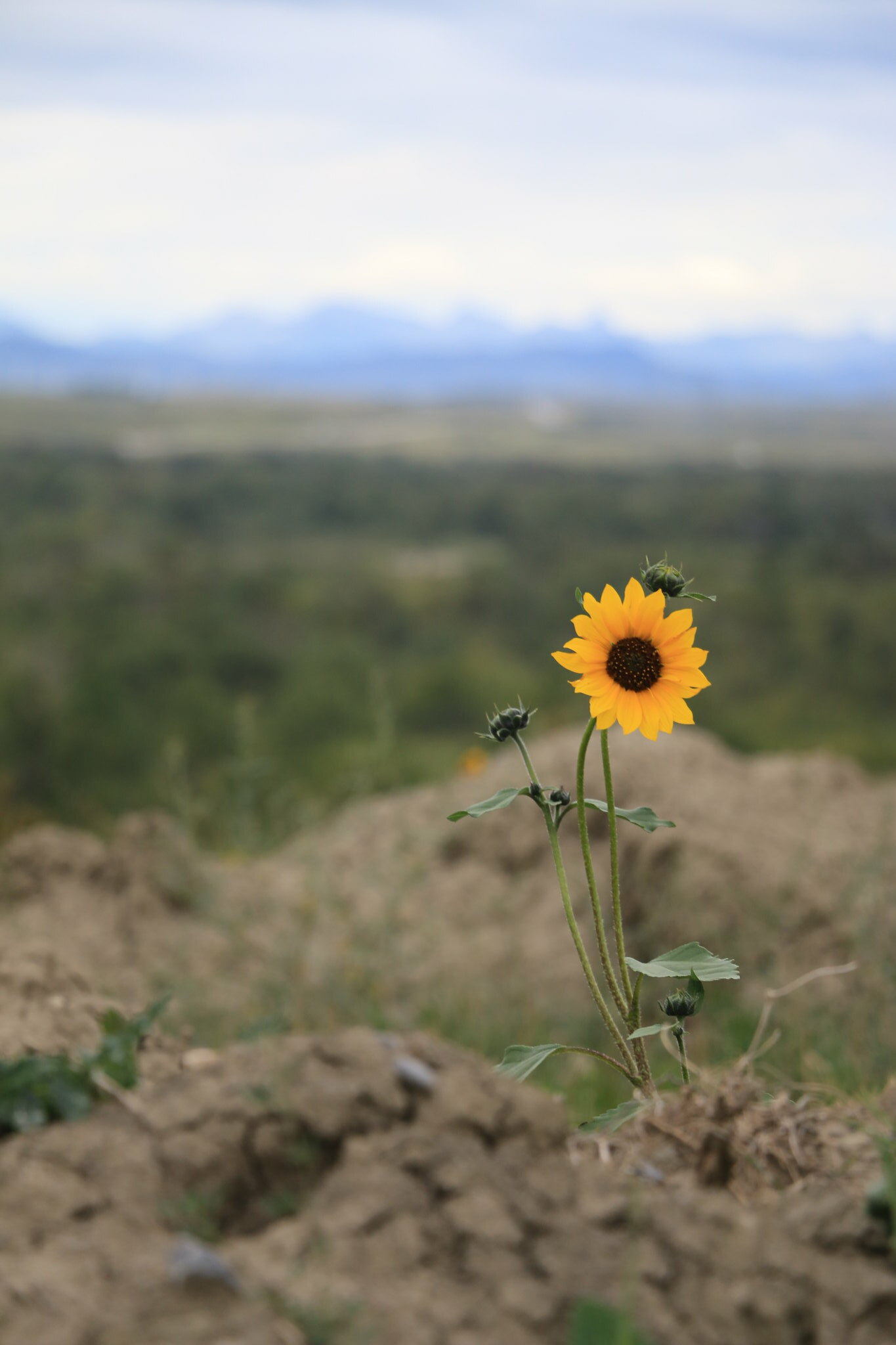
A sunflower grows from a pile of dirt; the only flower visible. To me, flowers growing where they shouldn't is a symbol of resilience.
(c) Photos by Gina
Coincidentally, this awareness week is the same week I am taking a photography course in Oregon. Last year, I took the instructor's course in Nevada. It was great! And, I was exhausted most of the time. In hindsight, I can see that I was crashing. Too much stimulation, too much exertion, too much excitement (and too much jumping).

I had confirmed my trip for this year shortly before I was diagnosed. Once I started to understand how my body was using energy, I searched the internet for travel tips. It was interesting to see some of the things I'd already started doing in recent weekend trips to support my own well-being. Clearly, I listen to my body more than I give myself credit for.

I've put some additional strategies in place for this trip--gleaned from others who've gone before me--in the hopes of mitigating the post-exertional malaise. Some of these strategies are as invisible as the disability itself; others will make it more obvious that I don't go about some tasks like others do.

I'm not so sure it's awareness I'll need as much as empathy.

One cool thing I discovered in an ME/CFS support group is the Hidden Disability Sunflower Program. Increasingly, businesses around the world--and airports in particular--are recognizing the sunflower as the symbol of invisible disability or illness. A visual prompt for awareness and empathy, as it were.

All four airports I will be travelling through are part of this program.

[Insert sigh of relief here.]

I have a lanyard that I'll be wearing, as well as sunflower stickers on some of my belongings, that I'm hoping will--as their website says--"make the invisible visible."

We'll see how it goes. 🌻

Wednesday, September 28, 2022

Plan, Prep, Pace

I hiked among the larch trees last fall. According to the reviews on AllTrails.com, it was considered moderate, yet kid-friendly. "If a six-year-old can do it, surely I can do it," I thought.

At that point in my health journey, I knew that physical activity exhausted me, though I didn't know why. It was a hike that I tried to take slowly and gently; yet, it still left me exhausted for a full week afterwards.

One year later, with a diagnosis in hand, I hold the gift of hindsight.

For those with ME/CFS, it's not only physical exertion that sucks mitochondria dry and frazzles the nervous system. Turns out that cognitive, social, and emotional exertion add to the load as well. When I thought of all the activities surrounding the actual hike, it's no wonder I crashed.*

With a strong disposition of persistence, I considered what would need to happen for a successful hike this year. Peyto Lake was a spot I had yet to see with my own three eyes (the two on my face, and the one on my camera), and I wanted the autumn colours against the aquamarine water.


And I did not want to crash.**

Photo of Peyto Lake on a clear day, surrounded by Rocky Mountains in the background. In the foreground are mostly coniferous trees, with some shrubs already betraying the fall season with yellow leaves.
(c) Photos by Gina
  • So, instead of a day-trip, it became an overnight trip.
  • I worked from home the day before.
  • I did not take any Airbnb bookings upstairs in the days leading up to my trip, so that I could be more blasé about cleaning and tidying.
  • I did only necessary chores.
  • My friend and I agreed I would not do any of the driving.
  • And, though I didn't ask, she carried my backpack of snacks, water, and camera gear the whole way.
  • We took a slow pace with lots of breaks.
  • I monitored my heart rate the whole way; I kept my breathing measured and steady.
  • And upon returning home, I didn't rush to put everything away. (My car is still half full of gear.)

All this, on top of the regular, daily things I do to keep my system stable.

...Now, the deceptive part about crashes is that they can be delayed by 12-72 hours after the activity or event. I had 3 crashes during the summer, and two of them I wasn't expecting. It's delightful. (#sarcasm). And so, as I went to bed on Sunday night, I wondered, "did it work?" 


...It worked.


As I type this at the 72-hour mark, a smile creeps up my face. My first pacing success.

Next to actually getting my diagnosis earlier this spring, this feels like the biggest of wins. 


* A "crash" is the term in the ME/CFS community to describe overdoing it. The clinical term is post-exertional-malaise (PEM), which means a worsening of ME/CFS symptoms after any sort of exertion. For me, a crash looks like a dysfunctional 24-48 hours on the couch, with brain fog that would make London jealous.

** Not just because a crash feels extra awful, but also because crashes can contribute to overall decline in the long run. 

Monday, June 20, 2022

The Outcome of Persisting Exhaustion and Exhaustive Persistence

I was in a discussion once on social media about navigating the medical system. Someone commented, "It's a full-time extra job being undiagnosed." Tell me about it; I just got out of that maze.

It started with food intolerances; as I'd had a "sensitive" gut since childhood, everything seemed to point to a gut issue... until about two years in, when I started to connect feelings of extreme lethargy and brain fog to physical activity and/or stress (both positive and negative).

Maybe it's not just a gut issue...

I had already started poking at the medical system because of the newly-developed food intolerances, and so I continued to hop around from specialist to specialist--while also regularly visiting a variety of medical professionals to help manage the symptoms-of-unknown-origin. Somewhere along the way, I realized I didn't even care about getting better--I just wanted to know what was wrong.

The anxiety is high when every bite of food feels risky.

The apathy weighs heavy while you wait for the brain fog to clear.

You can start to feel crazy making so many lifestyle changes without a clear idea as to why.

(Thank God for my therapist.)

I was given a diagnosis of IBS in 2020; by then I already knew that it wasn't the only thing going on. In one of my down-the-rabbit-hole, anything-new-I-can-learn-today searches, I came across a list of symptoms on the CDC website that I hadn't seen before. My eyes grew large as I read a list of criteria for which I checked nearly every box. I asked my GP if it was worth looking into, and she referred me on to someone who might be able to answer that question.

Four years, and six specialists later, I have a diagnosis. An internal specialist confirmed that my symptoms and experience tell the story of Myalgic Encephalomyelitis--or, as it's more commonly known, Chronic Fatigue Syndrome. (I will refer to it by its abbreviation, ME/CFS.)

A surprisingly common, yet poorly diagnosed disorder.

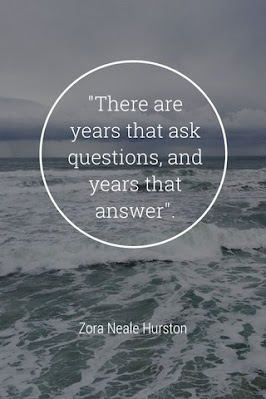
Quote: "There are years that ask questions, and years that answer." - Zora Neale HurstonThey tell you not to Google your own diagnoses, but at this point in my journey--two gastroenterologists, an internal specialist, rheumatologist, allergist, general surgeon, two dieticians, two naturopathic doctors, my GP, a chiropractor, two acupuncturists, and a massage therapist--we had eliminated and screened for a lot of different things; and, not a single medical professional had even whispered ME/CFS as a possibility. I honestly think it wasn't even in their mental catalogue of options. How long would it have taken to get this diagnosis if I hadn't regularly been checking for new information online?!

Diagnosis day was a good day.

ME/CFS is categorized by the World Health Organization as a neurological disorder. When my food intolerances first came about, I felt as if something in my body had short-circuited. Then, with the IBS diagnosis, I learned that part of the issue is mixed signals between the brain and the gut. Now, seeing ME/CFS as a neurological disorder, it really does seem that my circuits are a bit scrambled!

Will the circuits ever get fixed? Hard to tell. Like the wiring in an old house, there may be only so much that can be done. Some people get worse. Some get better. Most plateau at something less than 100% of their original health. There's no real prognosis. Right now, I just know that I'm prone to flip my breakers more often than others.

It's not life-threatening.

The internal specialist who diagnosed me said I've been doing everything right so far to manage my symptoms and take care of myself. After my appointment, I promptly joined a couple support groups (one local, one online), and I'm hoping to add more tools to my toolkit as time goes on.

I will keep poking the medical system as needed.

I don't know how much I'll share online--with some exceptions, I tend to keep most of the details of my health experiences to myself and those closest to me. However, I know that there is power in community. I know that advocating for myself is important, and sharing parts of my story may help you advocate for and empathize with others. In essence, I now live with a disability--it's a new perspective on something that's been important to me for many, many years. And, as stated before, this is a poorly diagnosed condition--because (as I'm learning) it is poorly understood and poorly researched. If I can help increase understanding, then perhaps someone in the future will not have to go through four years of emotional and physical turmoil before getting a diagnosis.

They're likely tired enough already.


Image source: https://steller.co/s/there-are-4dxR2bfkaYN/p/1